New Omega Publication Coming


Jean-Luc Miranda from the Omega Museum tells me the museum's Curator is publishing a new book about Omega watches called "Omegamania. The book will be translated into English -
unlike the Omega Saga, the content of which remains imprisoned in the French vernacular.

A special chapter will be dedicated to Omega Constellations. Yippee! The book will be published in the northern hemisphere Spring, or in the real world (Southern Hemisphere) Autumn :)

Other publications worth a view are:

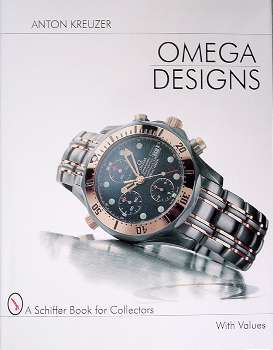
Anton Kreutzer's Omega Designs offers a resonably in-depth survey of Omega watches and includes a chapter on Constellations.

The book also features ads and brochures and a comprehensive list of and pictorial representations of Omega movements.

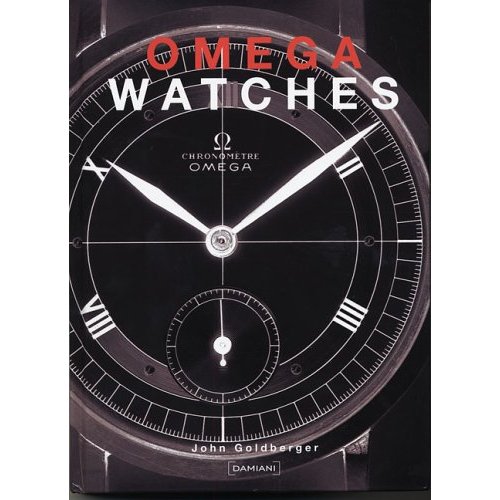
John Goldbergers pictorial essay of Omega watches is a feast for the eyes and features early Omega Constellations. The pictures make excellent reference pics, but, unfortunately there are no later 1960s models featured.

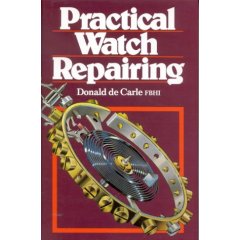
Donald DeCarle's Practical Watch Repairing is a standard text on mechanical movements. My 1986 copy is well thumbed, and the book provides information on basic horological theory and detailed descriptions of the hand-wound mechanical movement.
Apart from analysing problems that can occur with mechanical watches and suggesting solutions, he also describes in detail how to dissemble a watch, offers tips on diagnostics, and covers cleaning, lubricating and regulating watches. A good book for the neophyte wanting to know how these magic engines work.

Omega published the Omega Saga to celebrate the company’s 150th anniversary. It offers a comprehensive review of the company's activities over its history and also contains some interesting historical data and quite good pictures, but as I said earlier, it is for the Gauls and Frankophiles only. Its not available on Amazon as it wasnt pulished in the USA, but copies are available from Omega

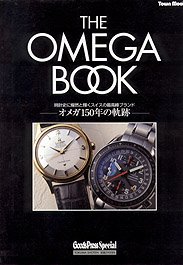
The Omega Book by Masaharu Nabata is probably one of the most authoritative books around and bests Omega Designs by far. The only problem is that it's written in Japanese. It has excellent glossies of Constellations amongst others, great photos of movements, and has pics of brochures and Omega ads. If you have a Japanese interpeter handy, this one is a gem. It also features some magnificent and rare specimens from the Omega Museum. Worth the cost just to look at the photographs.

A Change in Tack: Centrefolds at which to Ogle!


It can become discouraging chasing after the bad guys too much as it reinforces just how many Doctor Frankenwatch and other assorted villians inhabit the darker of eBay's shadows. So, let's remind ourselves what we're really here for: appreciating and giving rein to our desires to collect some of the best watches ever to be mass-produced.

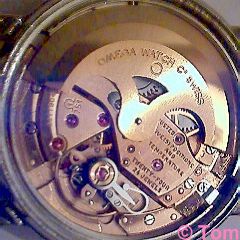
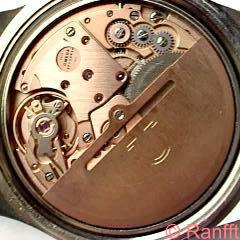
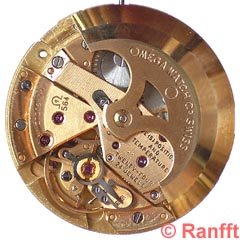
And what better way to enjoy Omega Constellations than seeing them with all their clothes off! Today's centrefolds are Constellation calibres 551, 751, 1012 and 564. Good reference pics to compare with others you come across.

Today's posts come courtesy of Doctor Roland Ranfft. Roland administers Bidfun, a German- based specialty and horological auction site. I have traded on Bidfun a few times and it has been a pleasure, largely because those listing are mainly watchmakers / horologists and are both friendly and knowledgable. Every now and then a nice Connie pops up.

The site is in both English and German and translation is made easier these days with on-line translators look Google and Babel Fish. Check it out - its also a great resource for collectors.


Update on Frankens


A reader advises that Sherbowtime has ended the listing mentioned below, and, after checking, I can confirm that is the case. Sherbowtime did indeed do the honourable thing and should be congratulated.

A regular visitor has pointed me to another of those old case emsembles hawked around by eBayer jdm_k20 with the fake dial and suspect case (see this post and also this post) being sold as a "Mint Constellation Pie Pan Dial".

The eBay seller, lecoultre, sold recently one of these fakes powered by a calibre 565 non chronometer movement and is at it again. This was also mentioned in an earlier post.

I emailed Lecoultre for clarification - let's see how he responds. Click here to view this little beauty of a Frankenwatch he is listing.

Lecoultre is one of those characters who has chosen to keep bidders names private on the listing - which, of course, we all know offers some protection of bidders from bogus second-chance offers, but also allows shill bidding to occur without anyone being the wiser.

Lecoultre describes the frankenwatch in this listing as "This is an excellent collector's grade Omega Constellation"  This is pure craperoni.

A Timezoner also makes the observation that LeCoultre is doubly deceptive in that not only is the movement incorrect for the case, it looks as if the bridge has been engraved with the adjustment information after the fact, in a slightly different font than other legitimate chronometer movements.

I recollect seeing others like this too. So I checked lecoultres earlier listing of one of these jdm_k20 frankencases and lo! lecoultre is using exactly the same photographs in his current listing as the previous listing. Some poor bunny paid $660.00 for his last effort.

Perhaps lecoultre should be our next roastee in our ongoing naming and shaming crusade?


Shame, Shame, Shame Sherbow Company/Sherbowtime

A reader sent me this Ebay listing to name and shame, and it presents a great opportunity for collectors to see a watch that truly does illustrate the definitive description of a Frankenwatch Constellation.

Go to eBay and pull up this listing: 230031179062 and print out a large pic of the dial for starters.

What do you think is wrong with the watch? And amongst all of the hyperbole in the description, ask yourself if there is any information that accurately discloses what the watch really is.

THE "MINT CONSTELLATION DIAL"

Was my education so badly neglected that I've grown up with a completely erroneous understanding of the word mint?

  • There may/may not be a real Constellation dial underneath, or one that has been made up by aggregating various dial bits. But, the painting of the dial looks as though it has been done in a sheltered workshop of foot painters who perhaps thought they'd try their hands (pardon the pun and lack of political correctness) at something other than Christmas cards! It's appalling. Not only is the paint poorly applied, but the combination of colours is enough to make even the toughest stomachs retch involuntarily! The edges where the two colours meet are all over the place. Omega never had the bad taste or pure gaul to colour Constellation dials in such gauche combinations: the dial screams inauthenticity.
  • Now take a look at the script: the foot painters have been at it again, demonstrating just how difficult it is to hold a brush between one's big and second toe. The "Constellation" script is about as amateur as you can get. And, jeez, they forgot to dot the "i".
  • The date surround looks suspect, although that may just be the angle of the pictures. Constellation date surrounds have multiple bevelled edges and this one doesn't gel with me.
  • The hands are wrong. The hour hand looks right but the minute hand is a ring-in. Notice that the hour hand has black inlay whereas the minute hand does not. These types of mixed marriages just never work out, particularly when the tall strapping minute hand intimidates the diminutive hour hand and makes it look as though it was stunted at birth. The minute hand is too long even for convex (the dial is not a 12 sided piepan) Constellation dials.
  • The footpainters let their young apprentices complete the cross-hair on the watch and it is out of whack with the Connie star. Real Constellation cross hairs intersect exactly in the middle of the star pointing to twelve o'clock.
  • The hour markers have me worried, because although similar markers grace Constellations, the bevels do not look as fine as those Ive seen on authentic Connies. The dial, if one can hallucinate to the extreme and overlook its decoration, looks uncannily like a Seamaster dial of the same vintage.
THE CASE

  • The case and watch hadn't met one another until recently. That is for absolute certain, because while the case was manufactured in 1961, the movement was manufactured in 1969 - the horological equivalent of carnal knowledge! We cant be sure that the case is fake though and this 14393 61 SC may/may not be one of the genuine ones.
  • The most plausible explanation is that the movement was sitting around waiting for a case to match it, or vice versa, and lo!, 14393 61 SC just came along.  The fact is that movement and case were never made for each other - divorce is the best option.
  • The crown on this watch is wrong too. It should have a ten-sided crown.
THE MOVEMENT

  • The seller is either stupid or a smartarse aiming to sell this watch to a neophyte collector who doesnt know his/her calibres. The movement is a calibre 565, never found in Constellations, but found often under the bonnets of Seamasters and Geneves.
  • The movement is not a chronometer, even though claimed on the dial. One way to ascertain if the movement is a chronometer is examining the rotor bridge. You will notice on this watch the words "24 Jewels" are stamped. On a genuine Constellation, you will see the words “Adjusted to (5) positions and temperatures” as well as the jewel count. One caveat about identifying a Constellation using this method is that you must be certain that the movement hasn't simply had a rotor bridge change.
  • The serial number, once again shown by Sherbowtime either stupidly or smartarsedly, is in the 30 million range indicating the movement was manufactured in 1969. We do indeed have an instance of a younger movement being seduced by a much older case.
THE SELLER

  • Sherbowtime has sold over two hundred items over the past year without attracting negative feedback. So, what does that say about the seller? Well it basically says that out of the 200-odd tranactions no-one was motivated to complain and probably a great many were satisfied with what they purchased.
  • If sherbowtime was selling sneakers and I was in the market for sneakers, then I would place a lot of emphasis on the seller's feedback. But with vintage watches on eBay, feedback should not be the main criterion, but one of a number of criteria one uses to determine whether to deal with a particular seller who is auctioning a particular watch. With vintage watches, however, many, many buyers don't know what they don't know and end up landing themselves a lemon.
  • Criterion number one with on-line auctions of vintage watches is that a seller is only as reliable and genuine as the watch they list today! Because vintage watch rip-offs are so rife, a potential bidder needs to examine thoroughly both the watch and the seller's description to evaluate how reliable and honest the seller is with the specific watch listed.
  • Because Sherbowtime has sold a lot of watches, one would expect that the seller knows a fair bit about watches. If that is the case, then it is reasonable to state that Sherbowtime may have well known when it listed the Frankenwatch under discussion that it was indeed inauthentic and Franken to the max!
So let's do some analysis of the Sherbowtime rhetoric to see if it matches with what it should have known was a watch that is worth much more as parts that it is as a complete item. Here we go!

"The SherBow Company is immensely proud to offer this absolutely dazzling Man’s Automatic 24 Jewel Vintage Omega Constellation, constructed with breathtaking beauty in 1970."

Oh, I thought it was constructed with metal parts and a plastic crystal???? OK Sherbowtime may speak English as a second language, but the intent of the description is clear to see: we are being invited to believe that this dog is the real thing. Of course only the movement (possibly the train bridge?) was constructed in 1969/1970.

"Recently Serviced and Running Strong, this awesome timepiece boasts a stunning Two Tone Black and Silver Pie Pan Dial, in excellent condition with sparkling raised golden hour markers that shimmer with the least amount of light."

Such flowering prose, such careless use of adjectives to describe a badly restored dial - I'm bedazzled!! It must be all that shimmering.

"And along with the glistening raised Omega name and logo, the golden-bordered date window, as well as the stunning Constellation “star”, this entire remarkable vision explodes brilliantly through the Tall and Thick Mint Crystal."

Stop it! Pleeeeaaaase! I'm just about to explode brilliantly by having an eye-gasm.

"The Stainless Steel case, in excellent condition after 36 years of life, is beautifully constructed. The Long and Solid Lugs angle sharply in and downward, and will sparkle with every turn of your wrist. "

Yes, just keep looking at those long and solid lugs folks, because it will divert your aattention away from the shitty, unprofessionally restored dial, wrong hands, and wrong movement. By the way, with all this shimmering, glistening, sparkling and exploding - you don't do a drag act in your spare time by any chance do you sherbowtime?

"The Stainless Steel screw down back, also in excellent condition, boasts a hidden treat reserved solely for the owner of this indisputable beauty: The famous image of the Constellation Observatory rising beneath a star-strewn sky, with all eight stars still clearly visible, set in gorgeous 14 Karat Solid Gold!"

Yeah, yeah, I'm distracted enough already! I'll show you my decal if you show me your decal, uhumph. And I'm still thinking about you miming "I am what I am"

"In addition, this exquisite timepiece would be incomplete without this stitched, lined and padded Brand New Swiss Imported Genuine Leather Band"

The need to refer to the stitching is a Freudian slip, as the seller realises what a great stitch-up this deal would be to the winning bidder.

"Measuring a large 41.9 mm from lug tip to lug tip by 34 mm in diameter without the crown, this treasure of Omega design possesses the Recently Serviced 24 Jewel Caliber #565 Automatic Wind Movement that is running strong and keeping good time. In addition, this brilliant timepiece boasts the Quickset Date feature whereby the date is quickly advanced by pulling the stem in and out."

I think somebody else has been pulling his stem in and out if they believe for one moment that anyone but a neophyte would fall for this overblown, purple drivel.

"Quad signed on the case, the dial, the crown and movement, this timepiece will be the “star” of your watch collection!"

I'm not going to be politically incorrect thrice in this post by asking how could a quad sign the case when everyone knows that quads can only move their heads!

But Star? Star, only in the sense that it would star alongside this brazen Doctor Frankenwatch in a Hall of Infamy, amongst other stars who think that purple prose and disclosure of some details (movement number and case number) will get them off any claims of misrepresentation.

The main point here is that the information that woulld allow inexperienced buyers to make a proper judgement on the watch is missing - deliberately so?

"The SherBow Company is committed to exceeding our customers expectations."

Yeah, whatever!!!!! Exceed is a good word to describe your listing: an excess of hyperbole, an excess of glimmer and shimmer, all underpinned by an excess of confidence that people wont call sherbowtime out on its patent lack of probity.

Shame, shame, shame Sherbowtime


The Internet appears to have had three major effects on the vintage watch market: firstly, in terms of supply; secondly, in relation to price, and thirdly, it has given parasites and con artists a global platform in which to practise their deceit.

SUPPLY

In pre-internet days, the collector’s lot was that of a somewhat nomadic search for elusive timepieces, of countless visits to auction houses and dealerships, of infrequent but heartening ‘finds’ and of time lines extending to many years, or even lifetimes, to build up substantial collections.

These days the legwork has to a large degree been replaced with an ever-changing marketplace of thousands of watches on Ebay alone. The collector’s experience and understanding of supply has been turned upside-down and watches hitherto thought of as rare or hard to find turn up regularly on various Internet auction sites.

It is now possible to assemble large collections in shorter periods of time if your passion is aflame and your coffers are deep. While this may satisfy in the short term the irrepressible obsessions and impulses of avid collectors, I wonder whether it will also gratify prematurely the collector’s appetite for a lifetime of interest and acquisition.

PRICE

The Internet has also had a significant impact on price. No longer can a few bricks and mortar vintage watches dealers monopolise price structures and quarantine specialist knowledge. The downside of this is that fewer people strike up a relationship with their dealer or watchmaker and instead fly solo on the Internet. However, if newbies land in one of the more respected brand or vintage forums, they will encounter many generous people willing to share their knowledge.

While the on-line auction scene and specialist trading pages of watch forums started off as a platform for connecting wholesalers to retailers, it has ‘matured’ into marketplace where collectors source vintage watches from a pool of suppliers, becoming almost, but not completely, a retail market. Prices are, to a larger extent, determined globally these days.

BLOODSUCKERS GO GLOBAL

The growth of the Internet vintage watch marketplace through on-line auctions and cyber-dealerships has also created a new group of consumers for vintage timepieces. And wherever there are neophytes with money, the slimy underbelly of commerce soon reveals itself.

In on-line watch forums the dissent over shady and dishonest seller practices has risen in concert with a creeping fatalism expressed by seasoned contributors who lament that the villains and shonks of the horological universe will ultimately push the good guys out.

Another common theme to run through many threads in on-line forums is ‘Caveat Emptor’. This is often accompanied with somewhat merciless sentiments like it’s “tough titties” and maybe a useful and salutary experience for newbies to buy a lemon or get ripped off. At least they walk away with a bit more experience - so goes the logic.

Too much emphasis, however, on Caveat Emptor and too little emphasis on blaming, naming and shaming the bloodsuckers who feed off the naiveté of new and often enthusiastic bidders sends the wrong message. When we place a disproportionate onus on buyers, the message we send to the parasites and rip-off merchants is that buyer naivety is a type of crime in itself. In the crooked mind of your average Internet parasite, that may mitigate his or her deceitful and underhanded practices.

Blaming the innocent makes it morally easier for the shonks to go into denial and avoid facing the full import of their deeds. It allows them to escape introspection and get out of facing the fact that they’re navel lint, that they hurt people, and that they’re a blight on the horological landscape.

If you’re new to the game and want to avoid becoming a victim of the swarm of internet parasites that are buzzing around looking for fresh blood, observe the following cautions: 


THE NEOPHYTES LIST OF ON-LINE VINTAGE WATCH AUCTION DOS AND DON’TS

  • Be unafraid to place the onus back on a seller to accurately and precisely describe the goods they have on offer. Ignorance on the part of a seller is no defence against a seller's legal obligation in most countries to accurately present the merchandise they sell.

  • Take the Caveat Emptor apologists at their word. Beware of all on-line sellers. Assume they are all crooks until you have proven conclusively to yourself that they are not. Feedback scores alone are not enough to determine legitimacy. Until you build your knowledge, assume that a seller is only as reliable and honest as the integrity of the watch they're selling now.

  • There are indeed good on-line sellers who describe in detail the features of a watch and who also detail accurately what they have done to bring a watch up to standard. Keep them in your 'favourites' list and follow their auctions to gain an idea of reasonable value.

  • Hazy, unfocussed pictures can hide a multitude of sins – only bid or buy from sellers who agree to provide you with quality close-ups. Match those close-ups with what you know are pictures of the genuine article.

  • Never buy a watch from someone who can’t or wont provide you with close-ups of the movement, caseback and dial.

  • Before you bid, check serial, caliber and caseback numbers to ensure they match to satisfy yourself that you are bidding on an authentic watch. Make sure the right 'stampings' appear on the movement and case.

  • Never buy a watch from someone who can’t or won’t provide relevant serial numbers and caseback numbers. If you haven’t got numbers how can you do an authenticity check?

  • Make sure that critical information about the watch is in writing. Often shonksters say "Look at the pics". This is often a tactic to escape legal responsibility, or in the case of eBay, the pitiful 'rules of engagement' it has established to regulate seller behaviour and protect buyers.

  • Make it a practice to email vendors and ask specific questions about the 'authenticity' of the watch. One practice worth following is to email the seller the following question (particularly if you have doubts about the watch), "Can you please confirm that this watch meets fully the factory specifications for case, dial and movement for this specific model and that the dial, movement and case left the factory together as one unit?" For authentic Constellations, the seller will have no difficulty is answering in the affirmative.

  • Ask for the service history of the watch. Unless the seller or dealer expressly says the watch has been serviced, assume that you will have to service the watch as soon as you receive it. Factor that into your bid.

  • If you want a vintage watch to look and perform as new, you’re in the wrong market.

  • Initially, until you have built up knowledge and expertise, go for quality and authenticity over a 'bargain'. Often a bargain is simply a 'dog' that experienced collectors won't touch.

  • If a vintage watch does look brand shiny new, chances are it’s been seriously re-furbished. Ask the seller to detail exactly what was done. If it’s not to specifications its value will be seriously compromised.

  • Never buy a watch that has been offered under a twenty-four hour listing. This is a favourite ploy of scam artists who purloin genuine pics and set up bogus listings.

  • Never buy a vintage watch from a Chinese seller who has minimal or no feedback. More fraudulent listings come out of China, than Indonesia, Malaysia, India, Thailand, Vietnam and other Asian countries combined. Be very skeptical when considering offerings from any of the countries listed in this pointer.

  • Unless you really know what you’re doing, avoid sellers who have little experience in vintage watches. Bid from sellers who have excellent feedback and a strong history of selling watches.

  • With vintage watches, be very wary of descriptions like: mint, minty, new-old-stock, brand new-in-box, keeps perfect time, like new, never worn, etc. Instead, go with sellers who detail in their listings specific condition reports and who use clear language to describe the watch.

  • Look for ambiguity in listings. If the description can be taken more than one way, assume that the most negative connotation is correct

  • Ask plenty of questions of the seller. Clarify any issues before you bid. Good sellers welcome questions and respond fully to queries. Shonks avoid being tied down and will often be cagey in their replies.

  • Avoid sellers who have 'private' feedback or who have opted for private bidding. While some sellers do this to avoid fraudulent second chance offers being sent to unsuccessful bidders, it is also a favourite ploy of sellers who set up what is termed 'shill bidding' - registering another name on on-line auctions and bidding against genuine bidders to inflate the price of the watch.

  • Never, repeat, never, bid in the early phases of on-line auctions. This can often have the effect of starting a bidding war. Follow the auction to see bid movement. Don't use the bidding mechanism on any of the on-line auction sites at all unless you wish to activate a 'Buy it Now' or 'Best Offer' bid. Instead, use one of the sniping services that bid in the last 7 - 10 seconds of an auction.

  • By using a sniping service you play your hand at the end of the auction. Most importantly, it allows you to decide rationally how much you are willing to pay for a watch (given your research) and then to enter that amount as your maximum bid. Sniping services can be found by Googling 'snipe' or 'sniper'.

Over time, if you build knowledge and expertise you can short-circuit some of the pointers given above. But, remember, even the most experienced of collectors can be taken for a ride.....and it's usually when they opted not to follow their own advice.


Putting a Smile on Your Dial?

A dial is, arguably, the most important visual feature of a watch. Irrespective of the excellence of the movement or its timekeeping qualities, if the dial is badly discoloured or flaking it makes the watch look sub-standard, tired or worn out and certainly diminishes its value.

Often Collectors are put off by flaking and badly discoloured dials on otherwise quite original Omega Constellations. Many shy away from such watches because of the general assumption that moisture is the primary cause of dial disintegration. The theory goes, that badly discoloured dials provide a good outward clue of a possibly rusty movement and are best avoided.

Tim Mackrain, however, suggests that there is another possible cause of dial discolouration that behoves the canny buyer to look more closely at watches with discoloured dials. He says,

"Sun damage is another cause of paint failure. I have personally taken apart thousands of Omegas sent to me from every climate in the world and have found that the effects of sun can mimic water damage to the dial paint in many cases."

Tim goes on to say that, "A beautiful movement with no water damage can lay below, and this type of paint failure, while not good for collectors of original watches, is a wonderful candidate for restoration" He believes that even a seasoned buyer needs to be cautious. "There can be a risk when purchasing a watch for restoration - water or sun damage?"

So, the first thing that needs to be done when chancing upon a Constellation with a badly discoloured dial is look under the bonnet with a jewellers loup. A clean, rust free movement is easily identified, and if the seals on the case have held up well, there will be no tell-tale rust spotting on the non-copperised parts of the movement and no corrosion of the case, particularly at the caseback seam.

If the movement has stood up well to the elements and around 40 years of history, you have a choice: Buy and restore (or have restored) or continue on your journey to find a Constellation with an original dial. If you take the restoration route, you could have the watch sent to Omega in Bienne, wait for quite a while, and ultimately receive the watch back with a new factory dial.

In the case of Pie Pan Constellations, however, it's believed that Omega has run out of factory dials and will replace old Pie Pan dials with convex Constellation dials from the same period. Given the increasing likelihood of not being able to source an original Pie Pan dial, you may choose to opt for a re-dial.

So if you choose to re-dial, what are you letting yourself in for? If you can source an excellent re-dialler - they are few and far between - then a dial refinished to look exactly like an original will indeed make a watch look much more attractive. But, from the standpoint of collecting original Constellations it may not improve the value of the watch - there is an exception and we'll review that later. From a vintage collectors point of view, a refinished dial diminishes the value of a watch when compared with a watch with an original intact dial that may have a nice patina.

Why is this? Well, generally, refinished dials are not of the same quality as the factory originals. Many refinished dials don't last as long and are not as durable as original dials. Factory dials may have baked-on, anodised and other manufacturing finishes such as clear coatings covering both the dial and markers to inhibit the ageing process.

Refinished dials are often painted, have ink stamped script and are finished to a lower level of quality and durability. They may mark more easily and often do not contain the level of detail of the originals. Also many original dials have the markers soldered to the dial, whereas in quite a number of refinished dials I have seen, the markers have been glued back rather than soldered (for the obvious reason that the soldering process could damage the paint on a re-dial) On occasions the glue is so thick on the back of the dial that it interferes with the running of the watch, particularly with date models.

A bad re-dial with inaccurate detailing can have the value of your watch dropping quicker than a souffle put in a refridgerator! It's fair to say that there are many more slap-dash, incompetent and inferior refinishing houses than there are high quality re-dialers. So, if you chance upon one, treat him like royalty.

Now, to the exception mentioned earlier. Because of the globalisation of the vintage watch market and accessibility of stock, many more people have the opportunity to buy Omega Constellations. A new niche has emerged in the vintage watch market for vintage watches that look almost showroom new. This market is driven, largely, by newcomers. I can attest to that from a continuous flow of emails from such individuals, and, to them, 'look' is very important and 'patina' and originality is often overlooked. These buyers will pay big money for look and wearability, so you will see on occasions quite high prices being paid for watches with refinished dials.

I imagine though that quite a number of newcomers to collecting, if they're serious, will ultimately develop a greater level of collecting sophistication and become interested in the finer points of detail, originality, richness of patina and other collectibility factors.

Because of the diminsihing supply of new-old-stock Omega Constellation dials, particularly Pie Pans, re-dialing will increasingly become a fact of life. Never-the-less, from a long-term collectibility standpoint, re-dialling should be an option when you have no other options.

Which Dial is Fake?


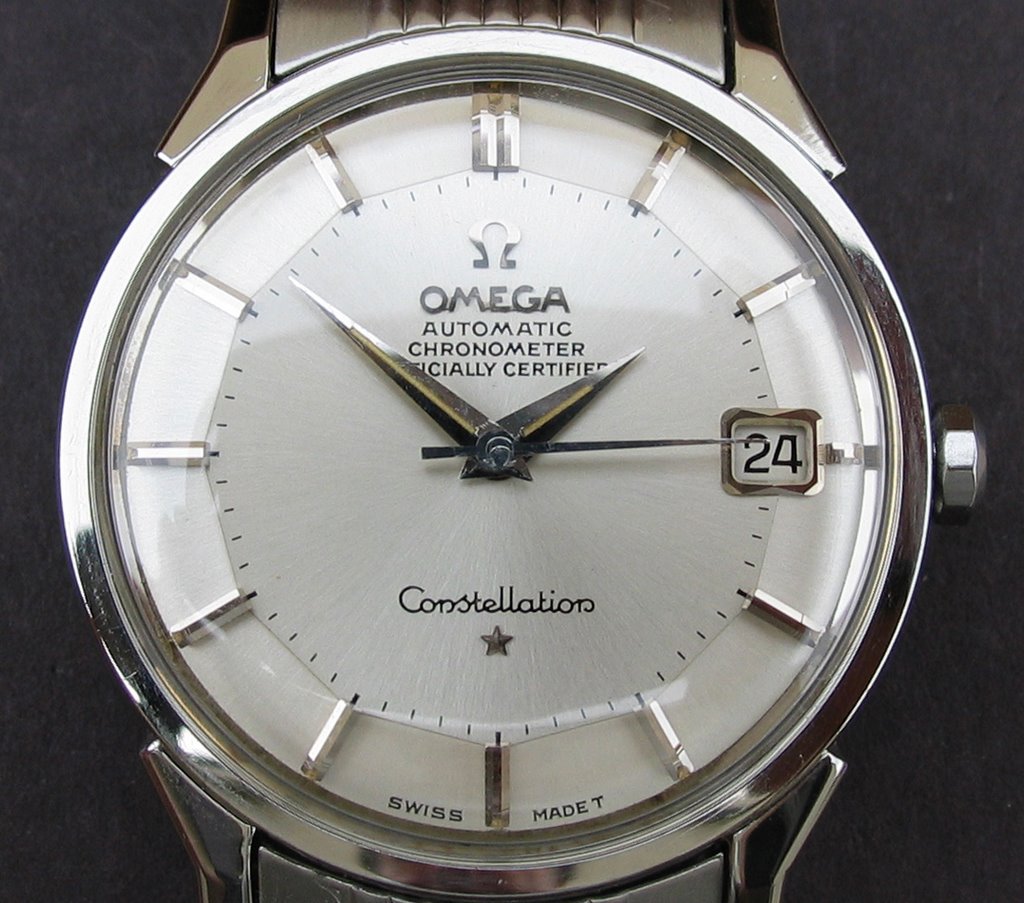
Can you tell which one of the above dials is the fake one?

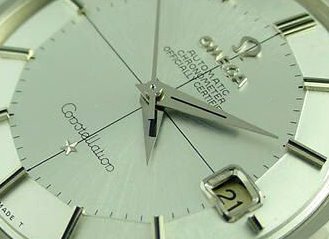
The first two pictures, supplied by Omega collector, Phil Cooper, are the genuine articles! So, how can you tell?

The first thing that should raise suspicion is NOS cross-hair dials - they seem to be everywhere at the moment - presenting as shiny, new and seemingly factory made. They're not!  Well, at least not at Omega factories anyway.

The next giveaway is the date surround. Note how the surrounds on first two examples are bevelled to make the top and bottom bars of the surround look slightly concave. Close inspection will reveal multiple bevelling to create this pleasing and detailed effect. Note the absense of the effect on the third example.

Note also how the bevelling on the surrounds on the genuine dials creates an eight sided effect on the upper parts of the surround, whereas in the fake example is uniformly rounded at the upper and lower parts of the surround.

The third sign is in the Constellation lettering. The first indicator is the thickness of the script. The second is inaccuracies in the lettering. For example where the S loops to the T in CONST the fake dial loops higher than the genuine lettering. The I is not dotted in the fake dial but is always dotted in genuine dials and notice how the Ns are formed differently.

The fourth sign is that the hands of the fake dial have black inserts, whereas the dial has written "Swiss Made T" at six o'clock.  The T indicates luminosity of either the markers or the hands and is never found on authentic dials and hands that do not have lume on either the markers or the hands.

Someone, somewhere is manufacturing fake dials and probably cases too, and as the values appreciate for Pie Pan Constellations, do expect to see more fakes around.

Phil Cooper also said that Omega in Bienne now replaces damaged PiePan dials with rounded and not twelve-sided dials as they no longer have stock of the latter. 

The lesson from this exercise is that there are some very clever fakes circulating, and it behoves collectors to build up a good reference library of large pics of authentic dials and cases so a comparison can be made. Often the naked eye is not enough to spot the diferences.

For more information on identifying Franken and inauthentic Connies please click here